
Best Shark Diving Destinations:
7 Places That Will Leave You Speechless
Seeing a shark underwater for the first time is unforgettable. It’s not fear. Or maybe it is, but the good kind. The kind of nerves that make you feel properly alive. There’s something about the way they move, how they glide past you like you’re not even there, that gets under your skin in the best way.
That’s why I’ve put together seven of the best places for shark diving around the world, where shark encounters aren’t a marketing promise. They’re a real possibility. Some feel like a far away adventure. Others might surprise you by how close they are. But every one of them has the same thing in common. They stay with you.
If you’re looking for the best shark diving experience, start here. These are genuinely some of the best shark diving spots in the world.
Destination | Best for | Best months | Water temp | Level | Liveaboard required |
|---|---|---|---|---|---|
Galápagos Islands | Hammerhead megaschools | June to November | 18 to 25°C | Advanced | Yes |
Fuvahmulah, Maldives | Resident tiger sharks | Year round. | 28 to 30°C | Intermediate to Advanced | No |
Malapascua, Philippines | Sunrise thresher sharks | Year round, best weather March to May | 26 to 30°C | Open Water with good buoyancy | No |
Tiger Beach, Bahamas | Clear water tiger shark encounters | October to January | 24 to 27°C | Open Water, experience helps | No |
South Africa | Big shark variety | Great whites April to September, others May to October | 17 to 24°C | Advanced | No |
Cocos Island, Costa Rica | Hammerhead action | June to November for pelagics, December to May for visibility | 26 to 29°C, 79 to 84°F | Advanced, 50 dives and current experience | Yes |
Red Sea, Egypt | Oceanic white tip (Longimanus) | March to June, September to November | 24 to 29°C, 75 to 84°F | Advanced | Yes |
Shark diving: more than adrenaline, a experience that changes you
My story with sharks started early, maybe too early, depending on who you ask. I was four years old when my mum decided it was a great idea to take me to an outdoor summer cinema to watch Jaws, yes, Spielberg. 😱 No cartoons. No gentle films. Just the killer shark, on a giant screen, with “surround sound”, or as close as you can get with one speaker in a town square full of folding chairs.
Instead of traumatising me, it did something else. It fascinated me. From that moment on, I knew I wanted to see one up close. Not on TV. Not in an aquarium. In their world, on their terms.
The first time I actually saw one, not counting the angel shark in the Canary Islands, obviously, I came out with my mask flooded. Not with water, with tears. I was crying from pure emotion. Because no matter how ready you think you are, the moment it appears, so calm, so powerful, so real, something inside you flips. And you’re grateful for it.
I don’t know how you’ll react the first time. Maybe you’ll stay cool like you see sharks every Tuesday. Or maybe your heart will beat so hard you’ll swear it’s trying to escape your wetsuit.
But I do know this. That image, the shark passing close by, unhurried and fearless, gets burned into your brain. And you don’t just remember it. You want it again.
How to choose the right shark diving destination for you
Choosing between the best shark diving destinations is not only about the species. It’s about your comfort level, your training, and the kind of experience you want. Here’s a quick way to pick the right one without overthinking it.
Best for beginners
If you are newer to shark diving, look for calm conditions, good visibility, and shallow sites. Tiger Beach in the Bahamas can be a great option because the depth is manageable and the environment is controlled. Malapascua can also work for newer divers if your buoyancy is solid and you are happy with an early morning start.
Best for advanced divers
If you want the best shark diving experience with bigger action and tougher conditions, go for places like the Galápagos or Cocos Island. Strong currents, deeper profiles, and blue water diving are common there, and that is exactly why the encounters can be so epic. South Africa is also a strong choice if you like higher intensity diving and fast paced entries.
Cage diving vs open water
Cage diving can be a good option if you want to see a top predator like a great white while staying behind a physical barrier. Open water shark diving is different. It relies on calm behaviour, good positioning, and respect for the animal’s space. Neither is “better” for everyone. It depends on what makes you feel comfortable and what kind of shark diving experience you want.
Strong currents, what to expect
Currents are not automatically a bad thing. They often bring the pelagic life in. What they do require is good buoyancy, awareness, and the ability to descend and hold position without stress. In current heavy destinations like the Galápagos, Cocos, and parts of the Red Sea, you will usually do negative entries, quick descents, and you may spend time tucked behind rocks to shelter from the flow. If that sounds exciting, you will love it. If that sounds like work, pick a calmer destination.
Liveaboard vs day boats
Some of the shark diving best places are only realistic by liveaboard. Galápagos and Cocos are classic examples. A liveaboard gives you access to remote sites and multiple dives a day, but it is a bigger time and budget commitment. Day boats are easier and more flexible, and they are perfect if you want a shorter trip or you are building confidence. If your dream sharks live far offshore, liveaboard is usually the answer. If you want a great experience with less logistics, day boats are your friend.
The 7 best shark diving destinations, the kind that leave you wide eyed
There are places where diving is calm and pretty, with colourful coral and curious little fish.
And then there are these places. The ones where you know sharks are out there because someone told you, because you’ve watched the videos, because you’ve been daydreaming about that moment for months. And still, when they finally show up, you go completely speechless.
This list isn’t ranked from best to worst. Each destination has its own magic. Different species, different scenery, different vibes. But they all have one thing in common. They’ve got that thing you’re looking for.
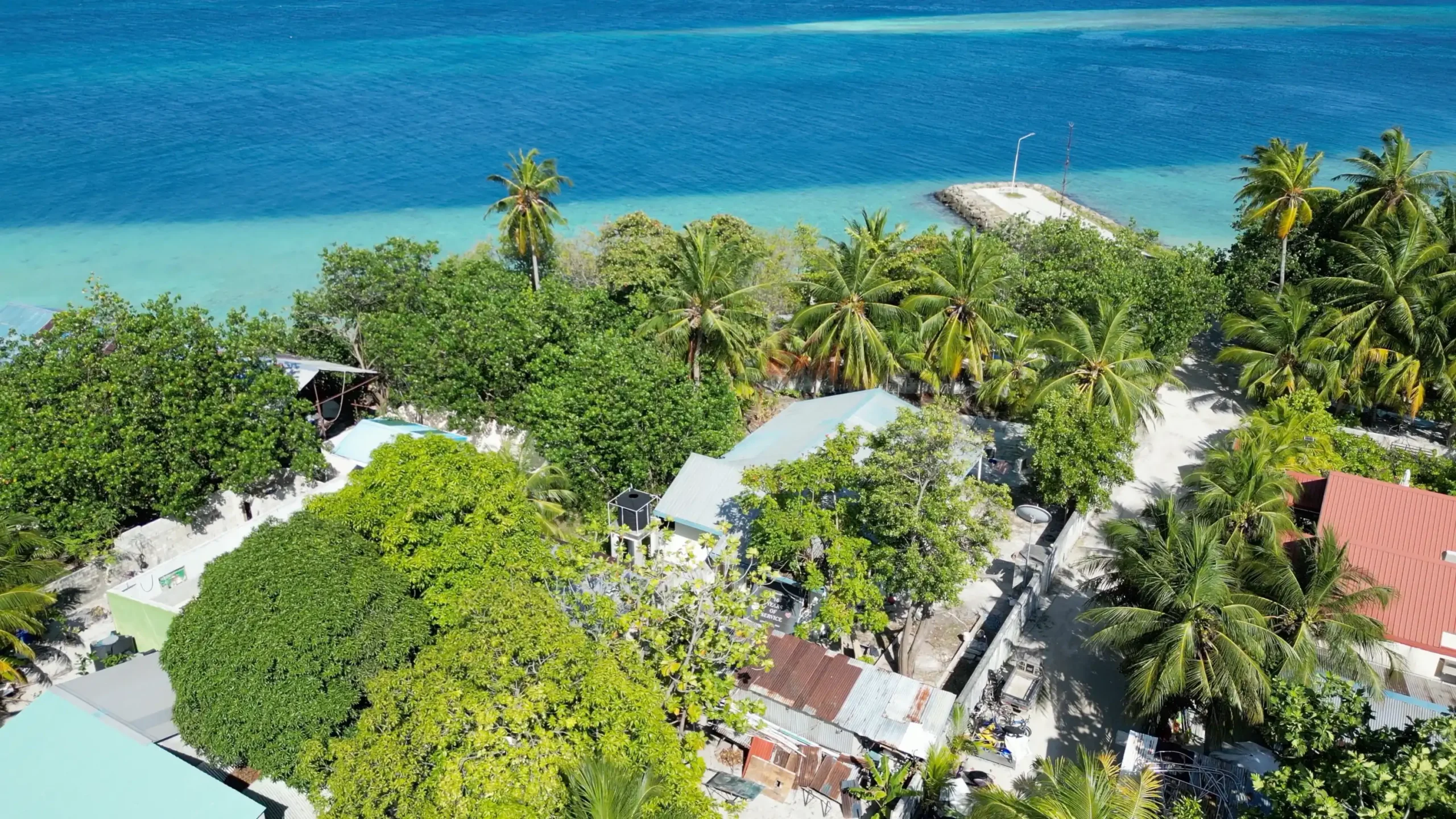
Shark diving in the Galápagos Islands: hammerheads, wild marine life, and a landscape that feels like another planet
If there’s one place in the world that belongs on every list of shark diving best places, it’s the Galápagos. For a lot of divers, it ends up being the best shark diving experience of their life. You can bump into sharks the way you bump into bicycles in Amsterdam. In a single dive, you might see schooling hammerheads, whitetip reef sharks, silky sharks, whale sharks, and even sea lions turning up to gossip about the whole situation. It feels like every iconic ocean creature has scheduled a meeting, and you’ve somehow crashed it.
The most famous dive sites, Darwin and Wolf, sit far from the rest of the archipelago and are only reachable by liveaboard. That’s exactly why the encounters can be so unreal. This is where some of the best shark diving in the world happens.
Here, it’s normal to watch huge schools of hammerheads cruise past like perfectly lined up aircraft. You’ll often see silky sharks patrolling the blue, and if luck is on your side, a whale shark will drift into view and suddenly you’ll feel about the size of a paperclip.
And it’s not just sharks. Playful sea lions, manta rays, tuna, dolphins, and even the famous marine iguanas complete a scene that feels designed to leave you open mouthed, or with your regulator quietly shaking, depending on how you handle excitement. The biodiversity here doesn’t feel like anywhere else, and there’s something almost spiritual about floating among so much wild life.
BEST TIME TO GO
June to November is peak season for more sharks and big pelagics.
January to May is warmer and usually calmer.
WATER TEMPERATURE
Around 18° to 25°C.
Bring at least a 5 mm wetsuit.
AVERAGE VISIBILITY
Typically 10 to 20 metres, depending on the site and season.
RECOMMENDED LEVEL
Advanced. Expect strong currents, deeper dives, and demanding conditions.
ACCESS TO THE TOP SITES
The best dive sites, including Darwin and Wolf, are liveaboard only and not accessible from day boats based on land.
Shark diving in Fuvahmulah, Maldives: tiger sharks that feel like island locals
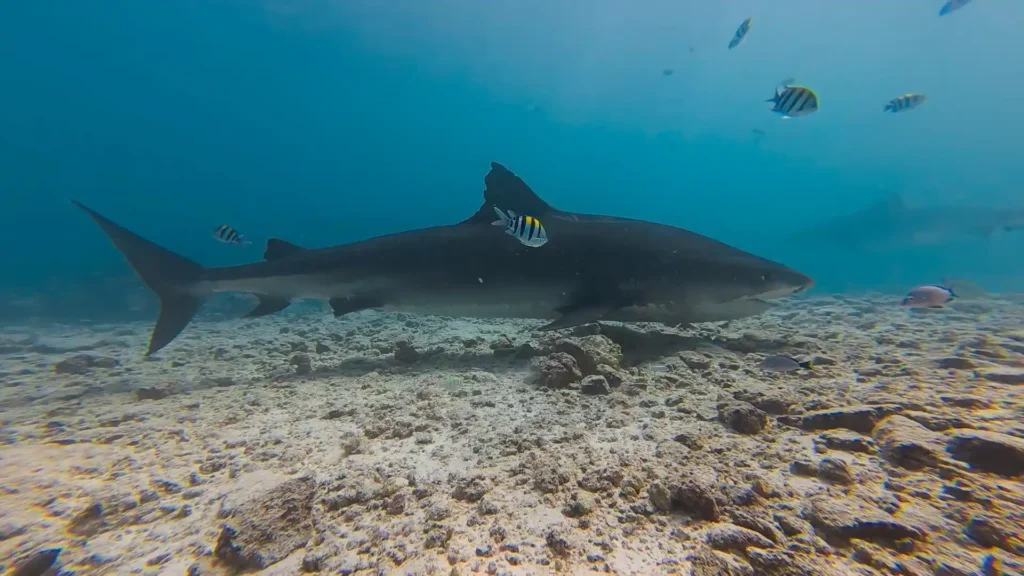
There are places where seeing a shark is pure luck. And then there’s Fuvahmulah. On this little island in the far south of the Maldives, the strange thing would be not seeing sharks.
No suspense, no “maybe today”. Tiger sharks live here. Proper residents. They cruise past the harbour, and you spot them on dive after dive like garden lizards on a sunny wall.
In Fuvahmulah, tiger sharks often show up near the harbour, drawn in by fish scraps from local fishing activity. That’s where the now famous dive site nicknamed Tiger Zoo, also called Tiger Point, is located. It’s a spot where you can see these animals up close without gimmicks, in a controlled environment, with experienced guides who know exactly how to move and how to keep the interaction respectful.
But Fuvahmulah isn’t only about tiger sharks. You can also see thresher sharks, hammerheads, grey reef sharks, and, in season, whale sharks and oceanic manta rays.
Add seriously good visibility, an island without big resorts or fake hype, and a local vibe that makes you feel part of the place from day one, and you’ve got one of the best shark diving experiences you can have in warm water.
BEST TIME TO GO
Year round.
For hammerheads, your odds are usually higher from September to December.
WATER TEMPERATURE
Around 28° to 30°C.
A shorty or a light full suit works, depending on how easily you get cold.
AVERAGE VISIBILITY
Up to 30 metres.
RECOMMENDED LEVEL
Intermediate to advanced.
Dives are often fairly shallow, but currents can be strong.
ACCESS TO THE TOP SITES
You can reach Fuvahmulah via a domestic flight from Malé. It’s also included on some liveaboards during the southern season, typically January to April.
If this destination just gave you that nervous excited feeling, you’ll love our Rasdhoo and Fuvahmulah itinerary. You can check the full plan here.
Shark diving in Malapascua, Philippines: thresher sharks at sunrise, and yes, you’ll be blown away
Some early mornings are unforgettable. Malapascua is one of them. When your alarm goes off at 4:30 a.m. and you stumble half asleep toward the dive centre, you just know something big is coming.
Coffee in hand, gear packed the night before, and a grin you can’t hide even with sleep still in your eyes, you set off for Kimud Shoal. It’s an underwater plateau out in the blue that thresher sharks have basically chosen as their personal cleaning station.
For years, divers saw thresher sharks at Monad Shoal, but since the pandemic the action has shifted. Now Kimud Shoal is the main stage, with closer encounters, often better visibility, and a much more comfortable depth.
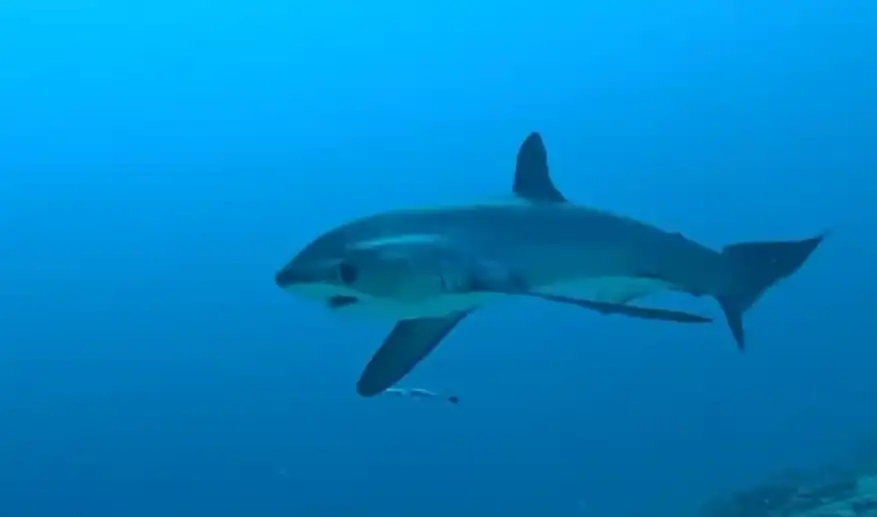
What hasn’t changed is the magic of the moment. The silence of dawn, the water still dark, and then suddenly, there they are. That ridiculously long tail that gives them their name, moving with an elegance that leaves your eyes wide and your heart doing something slightly dramatic inside your wetsuit.
A thresher shark dive in Malapascua isn’t like most shark dives. Nobody chases them. Nobody turns it into a show. You wait. You respect the space. You hover with good buoyancy and you appreciate every second the shark decides to gift you.
Sometimes you’ll see one. Sometimes three. Sometimes you lose count. And while nothing in the ocean is ever guaranteed, the chances of seeing thresher sharks here are famously high.
And Malapascua isn’t only about threshers. With good timing, you might also spot hammerheads, tiger sharks around Monad Shoal, or even baby blacktip reef sharks while snorkelling close to shore. Add a relaxed island vibe, postcard sunsets, and day trips that are genuinely worth it, like Kalanggaman Island, and you’ve got one of the most memorable shark diving experiences in Southeast Asia.
BEST TIME TO GO
Year round.
March to May often brings the best weather and visibility.
WATER TEMPERATURE
Around 26° to 30°C.
A 3 mm wetsuit is usually enough.
AVERAGE VISIBILITY
About 15 to 25 metres.
RECOMMENDED LEVEL
Open Water, as long as you have solid buoyancy control.
Thresher sharks are sensitive to sudden movement, so calm, steady diving makes a big difference.
ACCESS TO THE TOP SITES
Kimud Shoal, a cleaning station at around 13 to 15 metres.
Shark diving in the Bahamas: tiger sharks at Tiger Beach, with the right kind of adrenaline
If there’s one place that sounds like a legend when people talk about shark diving, it’s Tiger Beach in the Bahamas. About an hour by boat from Grand Bahama, this shallow sandbank with crystal clear water is one of the most famous spots on the planet for tiger shark encounters. And for good reason. Watching five to fifteen big tiger sharks cruising around you, calm as if they own the ocean, is the kind of shark diving experience that impresses even the most chilled out diver.
What makes Tiger Beach special isn’t only the number of sharks. It’s the visibility. With just seven to eight metres of depth, and a bright white sandy bottom that looks like an underwater photo studio, the conditions are perfect for observing, and photographing, these animals with a clarity that feels unreal. You might also see lemon sharks, nurse sharks, reef sharks, and if luck is on your side, a hammerhead passing through like it took a wrong turn.
Shark diving here is controlled, but not fake. Yes, bait is used, but in an ethical way, with clear protocols and experienced divers who know how to handle the interaction with respect and safety. The vibe isn’t “showtime”. It’s more like you’ve dropped into a perfectly timed choreography, even though the stars of the show have no idea you’re watching.
And when you surface, laughing and making those slightly shaky post dive comments, you already know. That mix of tension, respect, and pure excitement sticks with you. It’s not fear. It’s something more primal. And a little bit addictive.
BEST TIME TO GO
October to January, with a high presence of tiger sharks and excellent visibility.
WATER TEMPERATURE
Around 24° to 27°C.
A 5 mm wetsuit is recommended.
AVERAGE VISIBILITY
About 25 to 40 metres.
RECOMMENDED LEVEL
Open Water with solid buoyancy and good gear control.
Previous shark diving experience is a plus.
ACCESS TO THE TOP SITES
Boat departures from West End, Grand Bahama.
Most trips are offered as part of liveaboard style packages, or dedicated multi day shark diving charters.
Shark diving in South Africa: great whites, ragged tooth sharks, and hammerheads, all in one country
South Africa is basically the theme park of shark diving. You don’t have to pick just one species. You can do cage diving with great white sharks, dive reefs with ragged tooth sharks, and if you’re willing to wake up early enough, you can even spot hammerheads out in the blue. It’s a full on destination with character, big ocean energy, and zero boredom.
The crown jewel, of course, is the great white shark. Yes, the one Spielberg turned into a legend, in Gansbaai. This is where the famous great white cage diving takes place. Sightings have dropped in recent years, but the area still has a pull that’s hard to explain until you’re there.
If you’d rather skip the cage and jump into open water without any bars between you and the action, put these two names on your list. Aliwal Shoal and Protea Banks. Both are on the east coast near Durban, and they offer adrenaline packed dives with ragged tooth sharks, tiger sharks, and, in season, oceanic blacktip sharks and hammerheads.
Just know what you’re signing up for. Diving here can be demanding, with strong currents, quick descents, and that moment of “okay, we’re doing this” as soon as you hit the water. It’s not a beginner destination, but if you’ve got experience and you like your shark diving a bit more intense, South Africa will absolutely deliver. No fake hype, just real ocean and encounters you’ll remember for a long time.
BEST TIME TO GO
For great whites, April to September. For ragged tooth and tiger sharks, May to October.
WATER TEMPERATURE
Around 17 to 24°C.
A 5 to 7 mm wetsuit is common, plus a hood if you get cold easily.
AVERAGE VISIBILITY
About 10 to 25 metres, depending on the area and season.
RECOMMENDED LEVEL
Advanced Diver.
ACCESS TO THE TOP SITES
Gansbaai for great white cage diving. Aliwal Shoal and Protea Banks for cage free dives.
Shark diving at Cocos Island: hammerheads in full festival mode
Some places feel like underwater legends, and Cocos Island is one of them. Sitting more than 500 kilometres off the coast of Costa Rica, this remote speck in the Pacific is not a place you “accidentally” visit. You reach it by liveaboard after about 36 hours at sea, and what’s waiting for you out there is worth every wave on the way.
You won’t see a couple of sharks here. You’ll see dozens. Sometimes hundreds. Moving in formation like they’ve been rehearsing a submarine parade. The main stars are scalloped hammerhead sharks, cruising in huge schools around the island’s cleaning stations. It’s the kind of scene that gives you goosebumps even underwater.
And they’re not alone. You can also see whitetip reef sharks, silky sharks, Galapagos sharks, tiger sharks, eagle rays, oceanic manta rays, and if you’re lucky, whale sharks. If you love current diving, this is the full intensity version. Strong currents, deeper dives, and visibility that can change from one moment to the next. It’s not easy, but the rush is on a different level.
Cocos Island is a national park and a UNESCO World Heritage Site, and you can feel it. Marine life is remarkably intact, operators follow strict rules, and there’s a constant sense that you’re diving somewhere genuinely special.
This is not a beginner destination. You need experience, solid buoyancy control, and decent fitness. But if you’ve got that, and you want shark diving in capital letters, Cocos is one of those places that changes the way you see the ocean.
BEST TIME TO GO
June to November for more pelagic action. December to May for generally better visibility.
WATER TEMPERATURE
Around 26° to 29°C. It can drop to about 24°C, in thermoclines.
AVERAGE VISIBILITY
About 15 to 30 metres.
RECOMMENDED LEVEL
Advanced Open Water, with at least 50 logged dives and experience in currents.
ACCESS TO THE TOP SITES
Only accessible by liveaboard from Puntarenas, Costa Rica. The crossing takes around 36 hours.
Shark diving in the Red Sea, Egypt: elegance in warm water
If you love sharks, the Red Sea is a proper surprise box. Warm water, ridiculously good visibility, and more than 20 shark species cruising around reefs, walls, and cleaning stations like it is just another normal day at the office. From my very first giant stride in these waters, I understood why so many divers come back year after year.
This is not a single spot. It’s more like a legendary corridor of dive sites. Brothers Islands, Elphinstone, and Daedalus form a perfect triangle for spotting oceanic whitetips (longimanus), threshers, grey reef sharks, and, with a bit of luck, schools of hammerheads moving through the blue like they planned it.
What’s fascinating is how different the encounters feel depending on where you are. At Brothers, longimanus patrol with that calm confidence that instantly earns your respect. At Elphinstone, they can get so close you notice every detail of their fins. And at Daedalus, early in the morning, if everything lines up, hammerheads can appear out of the current, majestic and completely unpredictable.
And here’s the best part. Egypt makes it easy. Direct flights, liveaboards at reasonable prices, and a community of divers who turn every dive into more than just a dive. It does not matter if it is your first shark or number 200. In the Red Sea, every encounter still feels special. If you’re looking for shark diving best places that are warm, accessible, and genuinely exciting, this is one of them.
BEST TIME TO GO
March to June, and September to November, for a higher chance of encounters and strong visibility.
WATER TEMPERATURE
Around 24° to 29°C.
A 5 mm wetsuit works well, and a 3 mm can be enough in the warmest months.
AVERAGE VISIBILITY
About 20 to 30 metres.
RECOMMENDED LEVEL
Advanced. Many dives involve currents and open water conditions.
COMMON SPECIES
Oceanic whitetip (longimanus), hammerhead, grey reef shark, thresher shark, whale shark, and whitetip reef sharks.
Quick comparison of these shark diving destinations
Galápagos Islands
Highlights: hammerheads, silky sharks, whale sharks, whitetip reef sharks
Best time: June to November
Water temperature: 18 to 25°C
Recommended level: Advanced
Fuvahmulah, Maldives
Highlights: tiger sharks, hammerheads, threshers, grey reef sharks, whale sharks
Best time: Year round
Water temperature: 28 to 30°C
Recommended level: Intermediate to Advanced
Malapascua, Philippines
Highlights: thresher sharks, hammerheads, tiger sharks, baby blacktips near shore
Best time: Year round
Water temperature: 26 to 30°C
Recommended level: Open Water with good buoyancy
Bahamas, Tiger Beach
Highlights: tiger sharks, lemon sharks, nurse sharks, reef sharks, occasional hammerhead
Best time: October to January
Water temperature: 24 to 27°C
Recommended level: Open Water, shark diving experience helps
South Africa
Highlights: great white cage diving, ragged tooth sharks, tiger sharks, hammerheads in season
Best time: Great whites, April to September; ragged tooth and tigers, May to October
Water temperature: 17 to 24°C
Recommended level: Advanced for many sites
Cocos Island, Costa Rica
Highlights: scalloped hammerhead schools, silky sharks, Galapagos sharks, tigers, whale sharks
Best time: June to November for pelagics, December to May for visibility
Water temperature: 26 to 29°C
Recommended level: Advanced, 50 dives and current experience
Red Sea, Egypt
Highlights: oceanic whitetips, hammerheads, grey reef sharks, threshers, whale sharks
Best time: March to June, and September to November
Water temperature: 24 to 29°C
Recommended level: Advanced
What does shark diving really feel like? Spoiler, it’s not fear
The first time you cross paths with a shark underwater, you never forget it. It does not matter if it is two metres away or twenty. What you feel is not fear, even if your heart is trying to jump out of your wetsuit. It’s something deeper. A mix of total respect, pure awe, and a strange kind of calm.
You might freeze in place while your brain screams, this is actually happening. Or you might feel like crying, like I did the first time I saw one. I’m not even going to pretend I played it cool. My mask filled up with tears. Not because I was scared, but because I’d pictured that moment for so long, and the real thing was even better than I imagined.
There’s no epic soundtrack. No dramatic special effects. Just you, the sound of your breathing, and an animal that has been here for millions of years, moving with an elegance that ballet dancers would envy. Sometimes it comes close. Sometimes it drifts away. And you just hover there, between two worlds, knowing something inside you has shifted.
Because yes, shark diving is not an extreme sport for adrenaline junkies. It’s a shark diving experience that connects you to something bigger. To marine life. To fragile ecosystems. To your own smallness. And, above all, to the privilege of sharing a few minutes with them.
Tips for a safe, unforgettable Shark Diving experience
Shark diving is exciting. It is also a reminder that we are visitors in a wild place. The ocean is not ours. They know it far better than we do. If you want the encounter to be unforgettable in the best possible way, you go in with respect, awareness, and a calm head.
Here’s what I’ve learned, and what I always do, whenever I know I’m about to share a dive with these ocean legends.
Is shark diving safe?
Yes, in the vast majority of cases. When you follow a reputable operator, listen to the briefing, and stay calm and respectful in the water, shark diving is a very safe experience.
What should I do if a shark gets too close?
Stay calm, keep your position, and maintain awareness so the shark knows you see it. Do not wave your arms or bolt to the surface, and follow your guide’s signals.
What should I do if a shark gets too close?
It is very rare. Most sharks are not interested in people, and issues usually come from stressed animals, bad behaviour around wildlife, or poor conditions, which is exactly why etiquette and good guiding matter.
Most shark encounters are peaceful, magical, and deeply moving. If you stay calm, keep a respectful distance, and follow the briefing, you are setting yourself up for a safe and genuinely incredible shark diving experience. Sharks are not out there hunting you. They are busy being sharks. You are the lucky one getting a front row seat, as long as you do not mess with the balance.
Important note
These tips are based on real experience and widely used best practices, but the ocean is always unpredictable. Ocean Adventures, and anyone sharing these suggestions, cannot take responsibility for accidents involving sharks during diving or any other situation, even if these guidelines are followed. Respect the conditions, follow your guide, and dive within your training.
Why The Ocean Adventures feels different, and why our Shark Diving trips turn into stories
We are not here to tick boxes or collect bragging rights. At Ocean Adventures, shark diving is not “just another dive” in your logbook. It is a mix of incredible wildlife, laughs underwater (yes, it happens), good people, and those moments you carry with you for years.
We do not do tourism, we create stories
Because the best parts do not end when you climb back on the boat. They continue in the coffee after the dive, in the dinner where everyone replays the exact second the shark appeared, and in the WhatsApp group that somehow never dies. That is the real magic. Living it together.
Sharks plus good people is the perfect combo
Sure, you can go see sharks solo. But it is not the same. When you share that adrenaline and awe with people who get just as excited as you do, every sighting feels bigger. Even the little “what was I doing with my buoy” moments.
Real diving, no fake hype
No promises of perfect visibility. No guarantees of wildlife. This is the real ocean. Some days have current. Some days start early. What never fails is the energy, the excitement, and that feeling of being exactly where you want to be.
If you read this and already pictured yourself hovering in front of a shark, grinning behind your regulator, then yeah. This article was for you. See you down there.